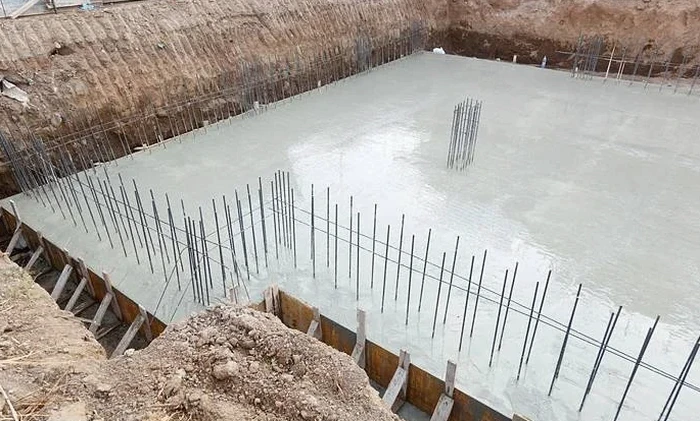
Milwaukee's development from a fur trading post into an industrial powerhouse was shaped by its geology: the confluence of three rivers atop thick glacial deposits. Today, that same geology directly influences every construction project from Walker's Point to Bay View. Shallow foundation design here cannot rely on generic bearing capacity assumptions. The city's subsurface typically involves a stiff clay till or layered lacustrine deposits, often with pockets of compressible organic silt from the post-glacial marshlands. A proper shallow foundation design integrates site-specific data to manage settlement and frost action. We combine regional drilling knowledge with advanced laboratory testing to calibrate footing dimensions and reinforcement precisely for Milwaukee's variable stratigraphy. For projects near the Menomonee Valley, verifying load transfer through the upper fill often requires a plate load test to confirm the design parameters before bulk excavation begins.
In Milwaukee, the biggest cost overrun isn't the concrete—it's the redesign when glacial soil variability surprises the contractor mid-excavation.
Local geotechnical context
After a decade of working on Milwaukee jobsites, we have seen a recurring failure pattern: owners and architects treat a standard three-story mixed-use building on Brady Street the same as one in the Third Ward. They are not the same. The Third Ward sits on filled marshland. If you skip a consolidation analysis and just use a presumptive bearing value of 2,000 psf from the code, you will encounter unacceptable post-construction settlement within the first two freeze-thaw cycles. The risk is amplified because Milwaukee's aging combined sewer infrastructure often leaks, creating localized zones of softened, high-plasticity soil that undermine a footing's subgrade modulus. We mitigate this by specifying a mud-mat and reinforcing the footing to bridge potential soft spots, while ensuring positive drainage away from all foundation elements to prevent the degradation of the bearing stratum over time.
Quick answers
How deep do footings need to be in Milwaukee to avoid frost heave?
The minimum depth to the bottom of exterior footings is 48 inches below finished grade, as enforced under the Wisconsin Uniform Building Code and IBC. In exposed conditions near the lakefront, we sometimes recommend an additional 6 inches of embedment into competent natural soil below any disturbed or frozen crust.
What is the typical cost range for a shallow foundation design package for a single lot in Milwaukee?
For a standard residential or light commercial project on a single Milwaukee lot, a complete design package—including site investigation, laboratory testing, and the engineering report—typically falls in the range of US$1,710 to US$3,540, depending on the number of borings and the complexity of the soil profile encountered.
Do you use spread footings or mat foundations in Milwaukee's clay soils?
We specify both, depending on the loads and the clay's consistency. For stiff, overconsolidated till with an undrained shear strength above 2,000 psf, isolated spread footings are the most economical. For softer lacustrine clays or areas with high groundwater in the Menomonee Valley, a mat foundation is often more effective because it reduces differential settlement and bridges local soft spots without deep foundations.
How does the proximity to Lake Michigan affect the design of shallow foundations?
Proximity to the lake influences the design in two key ways: groundwater levels fluctuate seasonally and can rise to within 4 feet of the surface, requiring waterproofing and drainage measures; and wind-driven rain and chloride exposure require a minimum 3-inch concrete cover over reinforcement for cast-in-place concrete in contact with the ground, per ACI 318 durability requirements.