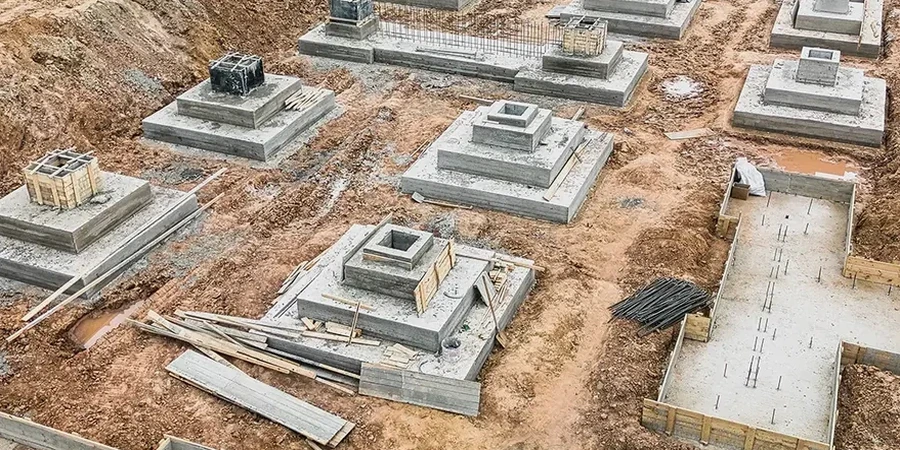
Too many Milwaukee contractors treat the entire city like it sits on uniform ground. That assumption backfires the moment you hit the compressible lakebed clays near the Menomonee Valley or encounter decades-old industrial fill along the KK River corridor. A standard shallow footing plan unravels fast, and change orders start piling up before the first concrete pour. We see this pattern repeat across Waukesha limestone transitions and the layered till deposits west of Miller Park Way. Pile foundation design is not a commodity item here—it requires a site-specific approach that accounts for the real stratigraphy beneath the frost line. Before you finalize a structural grid, it pays to understand what lies 40 or 60 feet down. A CPT test can reveal soft zones that standard borings miss, and in historically filled areas we often run test pits to visually confirm debris depth before selecting the pile type.
Milwaukee's lakebed clays and buried industrial fill make pile design a site-specific engineering challenge, not a catalog selection exercise.
Quick answers
What does pile foundation design typically cost for a Milwaukee project?
For most commercial and mid-rise residential projects in the Milwaukee area, pile foundation design activities range from US$1,520 to US$5,580 depending on the number of borings, pile types evaluated, and whether a test pile program is included. We offer a fixed-fee proposal after reviewing the preliminary structural loads and the geotechnical report.
How deep do piles need to go in Milwaukee?
It depends on the site geology. In the Menomonee Valley and near the lakefront, piles often extend 50 to 80 feet to reach competent dolomite bedrock. In western Milwaukee County where till is shallower, 30 to 50 feet may be sufficient. We determine the required depth from CPT data and confirm with at least one boring that extends 10 feet into the bearing layer.
Do you handle the pile installation supervision as well?
We offer construction-phase observation and can act as the owner's engineer during pile installation. Our team verifies refusal criteria, reviews pile driving logs, and confirms that installed capacities match the design assumptions. We do not self-perform the piling work.
What soil conditions in Milwaukee make pile design difficult?
Three conditions stand out: the deep compressible lakebed clays in the estuary zone, variable bedrock depth across the Milwaukee Formation, and pockets of industrial fill with debris that can deflect driven piles. Each requires specific design accommodations—downdrag analysis, tip elevation verification, and pre-drilling in fill zones.